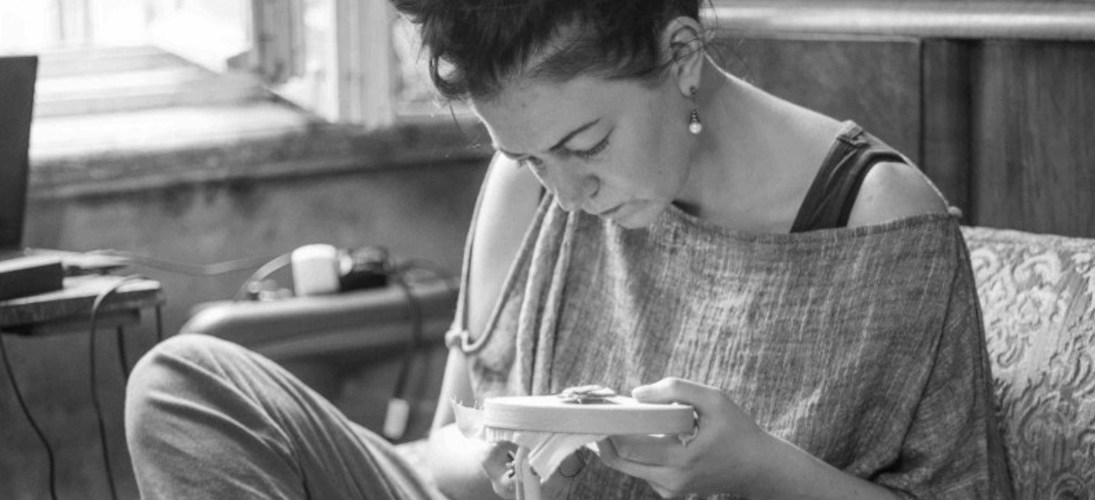
Baiba Rieber

Hand Embroidery – Baiba Rībere

Menu

Skip to content
  • About
  • Embroidery
  • Exhibitions
  • Publicity
  • Contact
  • Workshops
  • Stories

Contact

Instagram

If you have a message for me, please use the contact form below and I will reply to you as soon as I step away from the sewing machine…or embroidery frame.

Ja vēlies nodot man ziņu, lūdzu, izmanto šo kontaktformu un es tev atbildēšu tiklīdz kā atiešu no šujmašīnas…vai izšūšanas rāmja.

← Back

Thank you for your response. ✨

Warning
Warning
Warning
Warning

Warning.

Widgets

© Baiba Rieber, 2017-2025. Unauthorized use and/or duplication of this material without express and written permission from this site’s author and/or owner is strictly prohibited. Excerpts and links may be used, provided that full and clear credit is given to Baiba Rieber with appropriate and specific direction to the original content.

If you are in Riga, come and participate in the memento mori workshop on 30.10. at 18.00. Just buy tickets beforehand. The link for the tickets you will find @riga_anatomy bio. One of my embroideries from the “Piece-ful” series will now reside @riga_anatomy collection permanently, mirroring the specimens it originated from. Framing done skilfully by @ierame.lv A few months long journey with J.T. Lukstins and his story. #blackworkembroidery #rsn #handembroidery Part 5: I often hear visitors expressing their surprise: “Why did he commit suicide - he was such a good-looking young man!” as if suicide and good looks has something to do with one another. While I was embroidering his last portrait, I was thinking about this link the visitors are trying to make. The portrait I was stitching resulted in two portraits instead. Part 4: When people stand in front of Lukstins’ skeleton, they often very enthusiastically start reading his story out loud. Unexpectedly, they get quiet and slow down when reaching the part about the cause of death...shot himself….why? The fact is we are still scrambling for the facts and trying to piece Lukstins former life together like it has been done with his bones, but some pieces are missing. The suicide note that he left behind stated his last wish -  after his death his skeleton should be assembled and brought to the Anatomy museum, also that he commits sucide because of his unhappy family life and being tired of life. What does that mean? Part 3: Janis Teodors Lukstins was born in 1898. As many young men of that time, he participated in the WW1. Uncommonly he fought in south on the front against the Ottoman Empire and luckily survived the war. After WW1 he worked as an inspector in Karsava, but later moved to Riga where he worked at the police station Nr.5. Not long after moving, on the 4th of December, 1925, he hired a horse carriage. When he reached the corner of Valdemara and Elizabete’s street he shot himself in the head using his service weapon. Lukstins was brought to the hospital where he later died. He left a suicide note behind mentioning his last wish - after death his skeleton should be assembled and brought to the Anatomy Museum. His last wish was granted. On 9th of December, his body arrived at the Anatomical Theatre. The entry number in the cadaver register was No. 438, cause of death - ‘vulnus sclopeticum capitis’. A fairly large hole in his left template still remains, making people believe he was left-handed. Actually, that is the exit wound. After the impact with the bullet, bones from the left side of the scull went flying all over the place and couldn’t be retrieved. The bones on his right template (where the bullet entry wound is) are stapled together as they were retrieved from the inside of his scull. So why did he commit suicide? That I will cover in my next post. Part2: The portrait that I’m embroidering is not the same as the one you can see in the museum. This one is based on the tiny photograph taken few months before Lukstins committed suicide and is the last known image of him while he was alive. So, what happened to this 27-year-old man? I think this is one of the most frequently asked questions in the museum. Over the years, lacking real facts about him, people created their own answers and the skeleton of J.T.Lukstins got wrapped up in a bunch of legends and old wives’ tales. To find out the truth, another colleague of mine (a living one) went to the National Archives of Latvia. And this is what he discovered so far - Janis Teodors Lukstins was born in 1898. As many young men of that time… Part 1: When you enter @riga_anatomy , the first exhibit that greets you is the skeleton of a 27-year old male. His name is Janis Teodors Lukstins and he is the first willful donation of a human body to the museum’s collection. In a weird way he is also my coworker, being the senior colleague generously sharing a room with me. As a skeleton, he has served the museum from the 1925 and his main responsibility is to remind all visitors that every exhibit at the Anatomy Museum is not only a piece of scientific heritage, but once was part of a living human body. As part of my studies at @royalneedlework I decided to pay my respects and embroider the portrait of Jānis Teodors Lukstins of when he was alive and tell his story in blackwork. The portrait that I decided to embroider has never been shown before. If you have been to the museum already, you might think that you have seen his portrait and have heard his story but I assure you there is a lot more than meets the eye. Sorry for my infrequent posting, still here, still stitching…amongst other things. It has been quite challenging to shuffle classes at two schools - Ecole Lesage and Royal School of Needlework, a full time job @riga_anatomy and my creative career. I’m also learning from @laimdota_malle oil painting. I guess learning harmonica will just have to wait :) So what am I up to on the stitching front? Currently I’m working on a blackwork embroidery portrait of the man that at work is with me almost every day. He is not moving, he usually just stands patiently. His silence says more than any words ever could. His personal story is kind of a sad one but it’s worth hearing. Stitch by stitch I will tell you about this strange ‘colleague’ of mine. You can check out the highlight ‘One man’s story’ ☝️and my future infrequent posts 🙈 to find out more about him and life in general. The textile art magazine ‘Embroidery’ has published an article about me and my work - both as an artist and as a @riga_anatomy museum employee. To find out more about my practice, how it all started and what’s ‘on my desk’ right now read it @embroidery_mag September / October 2024 issue. Thank you @embroidery_mag and Ellen Bell. Esmu priecīga ziņot, ka es un mana personālizstāde "Mierpilns", kas bija apskatāma @riga_anatomy , tikusi nominēta "1 kg kultūras" balvai kategorijā "Starts" 💥 Pateicībā, Baiba ❤️ The titles in these series are their unique "name" in the museum's collection - the registration number. But this work has two 'names' or titles making people think it's a double portrait. Actually it comes from one and the same person. It's just that the body parts are resting in two seperate jars even though they belonged to the same person. As facial muscles revealed during my research - this person used to have dimples in their cheeks when smiling. That's why this portrait is the most 'anatomical' in the 'Piece-ful' series.
Latest news
ask me a question
order
get inspired
learn
  • Instagram
Website Powered by WordPress.com.
  • Subscribe Subscribed
    • Baiba Rieber
    • Already have a WordPress.com account? Log in now.
    • Baiba Rieber
    • Subscribe Subscribed
    • Sign up
    • Log in
    • Copy shortlink
    • Report this content
    • View post in Reader
    • Manage subscriptions
    • Collapse this bar